Core Characteristics
Entropy Creation
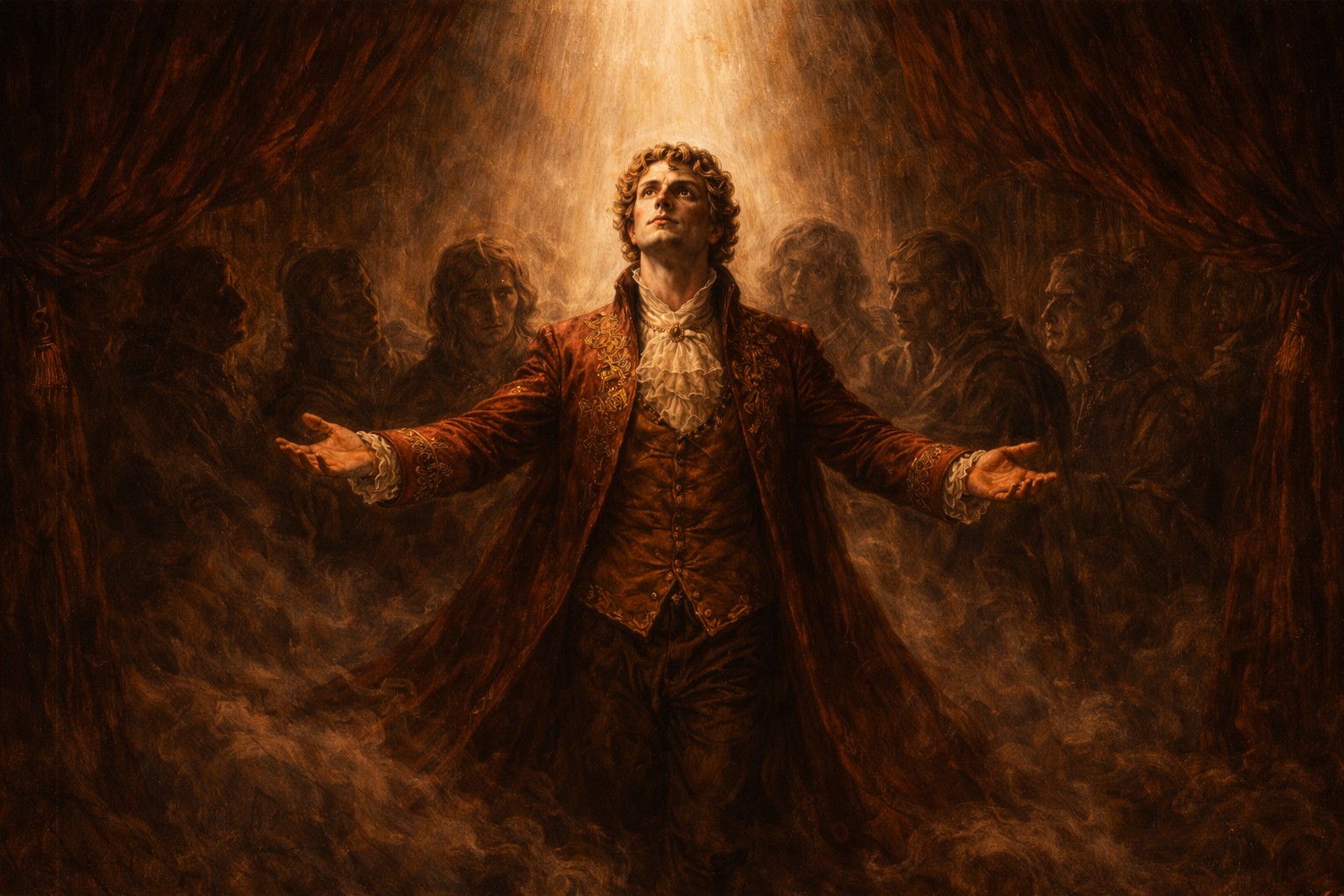
The Chaos Agent actively increases uncertainty in the game. They raise questions without answering them, suggest possibilities without committing to conclusions, and ensure that every discussion ends with more confusion than it began.
This approach manifests in several behaviours:
- Constant questioning: Raising doubts about everyone, including themselves
- Theory generation: Proposing multiple interpretations of every event
- Contradiction toleration: Comfortable holding mutually exclusive possibilities
- Attention dispersal: Preventing focus from settling on any one target
Misdirection Mastery
The Chaos Agent excels at pointing elsewhere. When discussion moves toward a dangerous topic, they redirect. When patterns emerge, they obscure. Their goal is never to defend specifically but to ensure that accusation loses meaning altogether.
Suspicion Spreading
The Chaos Agent distributes suspicion widely rather than allowing it to concentrate. They find something suspicious about everyone, ensuring that no individual attracts disproportionate scrutiny - including themselves.
Strategic Approach
Early Chaos Seeding
From the game's start, the Chaos Agent introduces uncertainty. They comment on ambiguous behaviours, propose alternative explanations, and ensure that early consensus becomes impossible.
Suspicion Distribution
The Chaos Agent maintains rough parity of suspicion across players. When anyone becomes too trusted, they raise questions. When anyone becomes too suspected, they introduce alternatives. This equilibrium prevents decisive action.
Crisis Exploitation
When crises occur - murders, shocking revelations, unexpected votes - the Chaos Agent exploits the confusion. They add interpretations that complicate understanding, preventing the group from processing events coherently.
Deflection Through Noise
When accusations approach them, the Chaos Agent does not deny so much as drown the signal in noise. They raise so many other concerns, possibilities, and questions that their own situation becomes just one of many unresolved issues.
Strengths
Detection Prevention
In sufficient chaos, detection becomes impossible. If no one can be confident about anyone, the Chaos Agent cannot be confidently identified. Their survival depends on maintaining uncertainty, and they are very good at it.
Analysis Disruption
The Detective archetype depends on finding patterns. The Chaos Agent specifically disrupts pattern formation, making the Detective's approach ineffective. Systematic analysis requires stable data; the Chaos Agent ensures instability.
Adaptability
The Chaos Agent's strategy requires no specific narrative or position. They can adapt to any development, turning new information into further confusion. This flexibility makes them resilient to unexpected events.
Collaborative Benefit
Chaos benefits all Traitors. Even if the Chaos Agent cannot coordinate explicitly with fellow Traitors, the confusion they create provides cover for everyone. They contribute to team success through environmental effects.
Weaknesses
Suspicion Accumulation
The same constant questioning that creates chaos can itself become suspicious. Players may recognise that one person seems to be behind much of the confusion and conclude that the chaos is manufactured.
Noise Fatigue
Groups can develop resistance to noise. Players may learn to tune out the Chaos Agent, reducing their contributions to background irrelevance. Once dismissed, the Chaos Agent loses their primary tool.
Decision Prevention
Chaos prevents good and bad decisions alike. Sometimes Faithfuls are close to identifying a Traitor, and the Chaos Agent's intervention saves their ally. Other times, the chaos prevents Faithfuls from making necessary eliminations even when correct.
Fellow Traitor Frustration
Chaos can frustrate fellow Traitors who want to execute specific strategies. The Chaos Agent's unpredictability may undermine coordinated plans, creating tension within the Traitor faction.
Interactions with Other Archetypes
With the Detective
The natural adversary. The Detective seeks patterns and certainty; the Chaos Agent destroys both. This conflict often becomes explicit, with the Detective attempting to cut through noise while the Chaos Agent generates more.
With the Vocal Accuser
A complex relationship. The Chaos Agent can redirect the Accuser's energy toward multiple targets, preventing focus. Alternatively, the Accuser's conviction can cut through chaos, forcing clarity the Chaos Agent wishes to prevent.
With the Quiet Observer
These archetypes can confuse each other. The Quiet Observer tries to make sense of events through observation; the Chaos Agent makes events senseless. However, the Observer's distance from chaos generation may eventually allow them to identify its source.
AI Simulation Observations
In computational simulations, Chaos Agent agents show distinctive patterns:
- Entropy metrics: Measurable increase in group uncertainty when Chaos Agents are present
- Decision delay: Longer average time to vote completion
- Accuracy reduction: Lower Faithful accuracy in Traitor identification
- Self-detection: Moderate detection rates - higher than Puppet Master, lower than direct actors
- Game length: Correlation with longer games due to prevented decisions
The simulation data suggests Chaos Agents are more effective in larger groups where confusion spreads more easily. In smaller groups, the source of chaos becomes more obvious. They perform best when combined with low-profile Traitor archetypes who can hide in the chaos they create.
Playing as the Chaos Agent
Early Game
Establish yourself as someone who thinks carefully about possibilities. Raise questions rather than accusations. Be known for considering multiple angles rather than for making noise.
Mid Game
Increase confusion gradually. As the game intensifies, the need for clarity increases - and your role is to prevent it. Redirect conversations, introduce alternative theories, and maintain suspicion equilibrium.
Late Game
Chaos becomes harder to maintain with fewer players. Consider transitioning to a different approach or ensuring your chaos has served its purpose. Sometimes silence is more confusing than noise.
Under Accusation
Do not deny directly. Instead, acknowledge the concern while raising many others. Make your situation one of numerous unresolved issues rather than the central focus.
The Chaos Threshold
The archetype requires careful calibration. Too little chaos, and the game proceeds normally toward detection. Too much chaos, and you become its obvious source. The optimal level disrupts analysis without becoming conspicuous.
Finding this threshold requires constant attention to group dynamics. The Chaos Agent must read the room continuously, adjusting their output based on how much confusion the group can absorb without becoming suspicious of its origin.
Conclusion
The Chaos Agent archetype approaches survival through environmental disruption rather than personal concealment. By maintaining constant uncertainty, they prevent the pattern recognition and focused analysis that would expose Traitors. However, manufactured chaos can itself become detectable, and the noise that protects can also annoy. The most effective Chaos Agents learn to calibrate their disruption precisely, creating enough confusion to prevent detection without generating suspicion about its source.